10 Botanical Line Art Ideas
Botanical line art distills nature into clean contours, elegant spacing, and quiet rhythm. This guide collects ten focused ideas to practice flow, balance, and expressive minimalism without overworking pages. You’ll use varied line weights, purposeful negative space, and subtle texture to suggest depth while keeping compositions calm. Each section delivers a single, practical approach to Botanical Line Art, so you can build a cohesive series. Keep tools simple: fineliners, brush pens, or a soft pencil. Start light, refine selectively, and let breathing room carry the story.
Add Quick List
- Wildflower Sprigs Botanical Line Art
- Monstera Leaves Botanical Line Art
- Herb Wreath Botanical Line Art
- Fern Fronds Botanical Line Art
- Desert Succulents Botanical Line Art
- Vintage Botanical Plate Botanical Line Art
- Peony Bloom Cutaway Botanical Line Art
- Hanging Houseplants Botanical Line Art
- Woodland Mushrooms Botanical Line Art
- Seasonal Branch Study Botanical Line Art
Wildflower Sprigs Botanical Line A
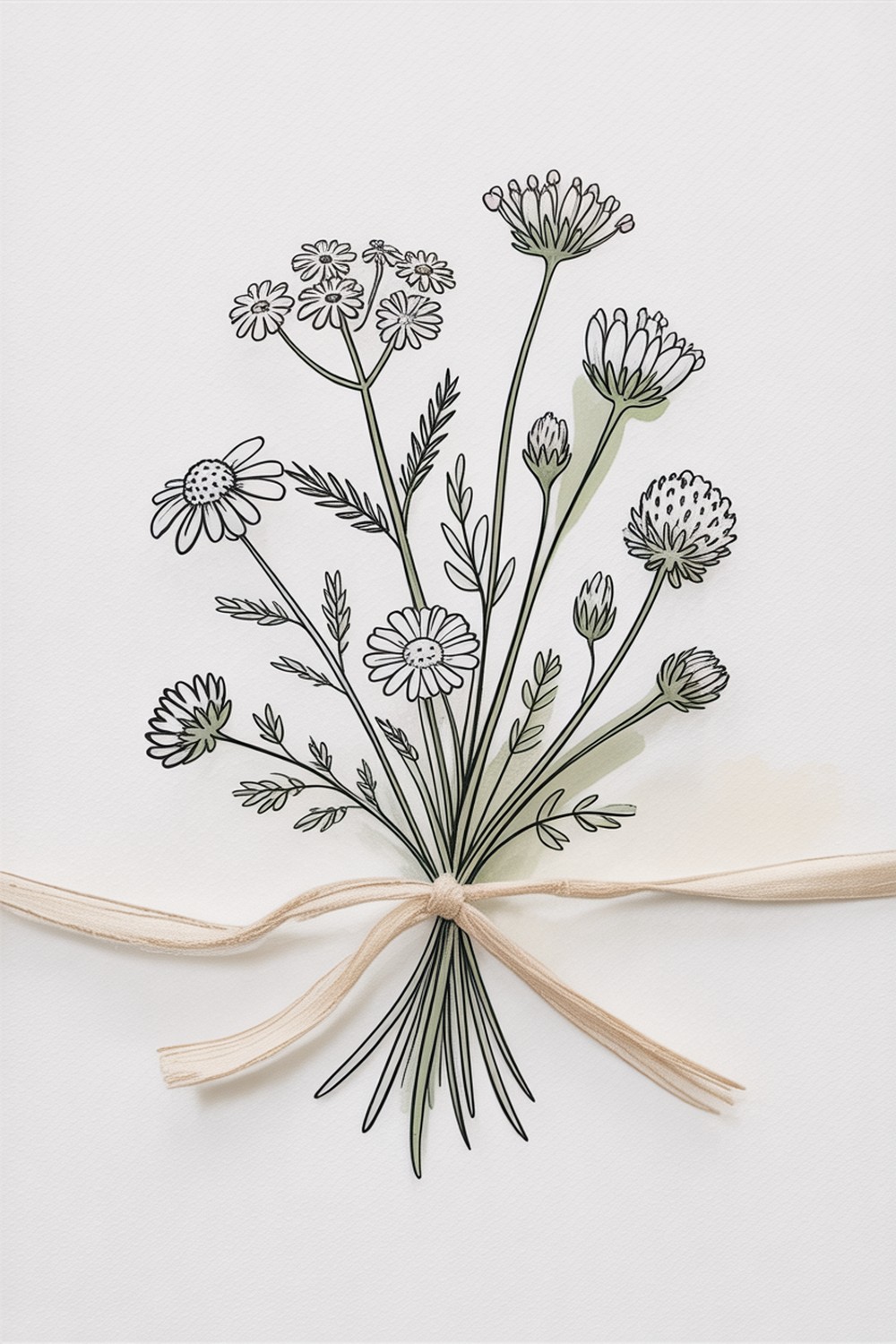
Build a gentle cluster of meadow sprigs—yarrow, chamomile, and clover—arranged in a loose fan. For Botanical Line Art, vary line weight: delicate petals in fine strokes, firmer stems with confident, single-pass lines. Use negative space to separate species, leaving small air pockets between heads and leaves. Suggest texture with sparse stipples at flower centers and a few tapered hatches at leaf bases. Keep overlaps intentional: two or three crossings anchor depth. Finish with a slim ribbon tie, drawn lightly to avoid overpowering the fragile blooms.
Monstera Leaves Botanical Line Art
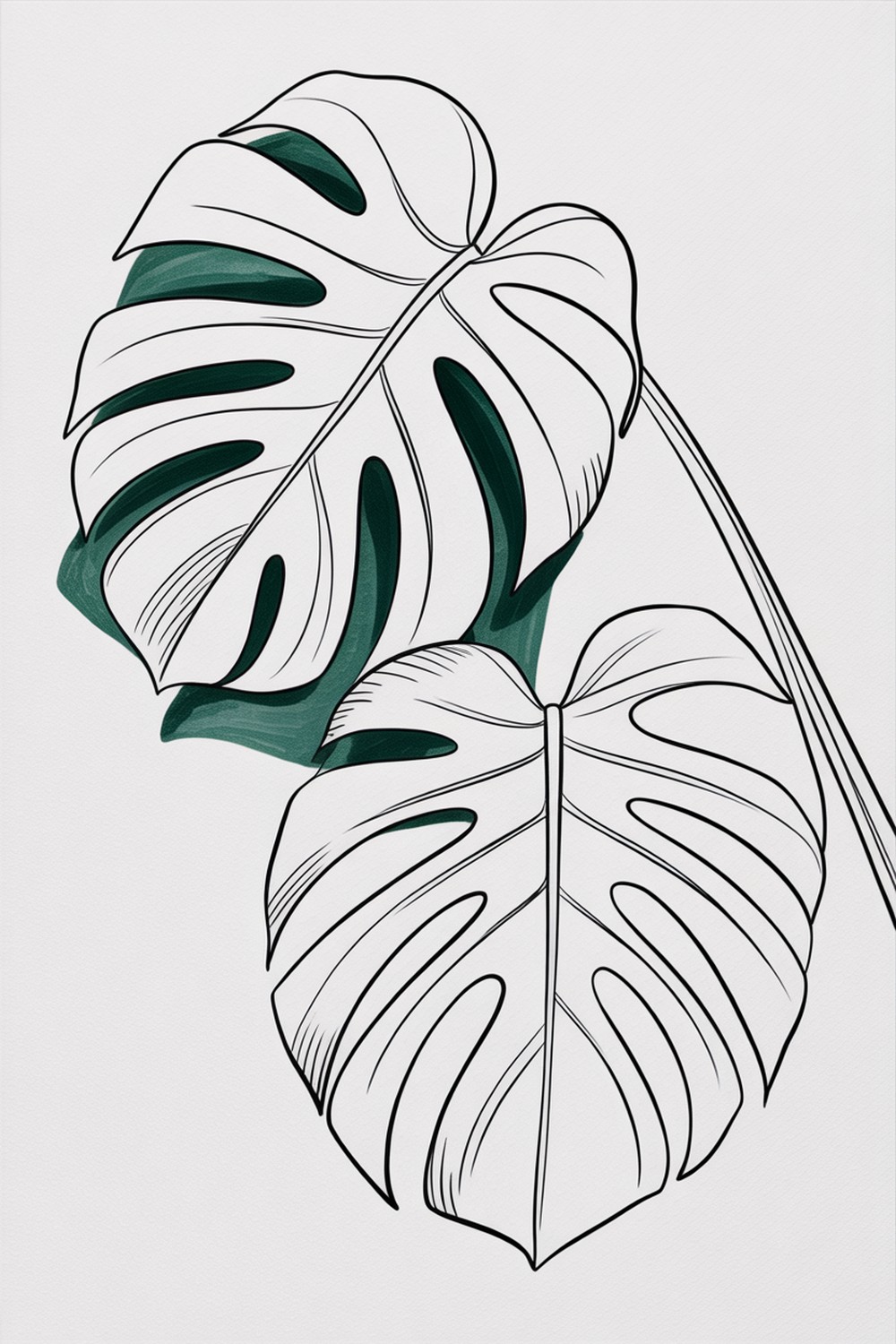
Focus on three overlapping monstera deliciosa leaves, each at a different angle. In Botanical Line Art, clarity matters—draw the midrib first, then radiate veins before cutting fenestrations with smooth, decisive arcs. Keep outer contours slightly heavier than inner lines to push volume. Preserve highlights as untouched paper along edges where leaves overlap. Add a few micro-nicks to break perfection and feel organic. Limit textures to short, curved hatches near the petiole. A single, slender stem winds behind, unshaded, to retain an airy, sculptural silhouette.
Herb Wreath Botanical Line Art
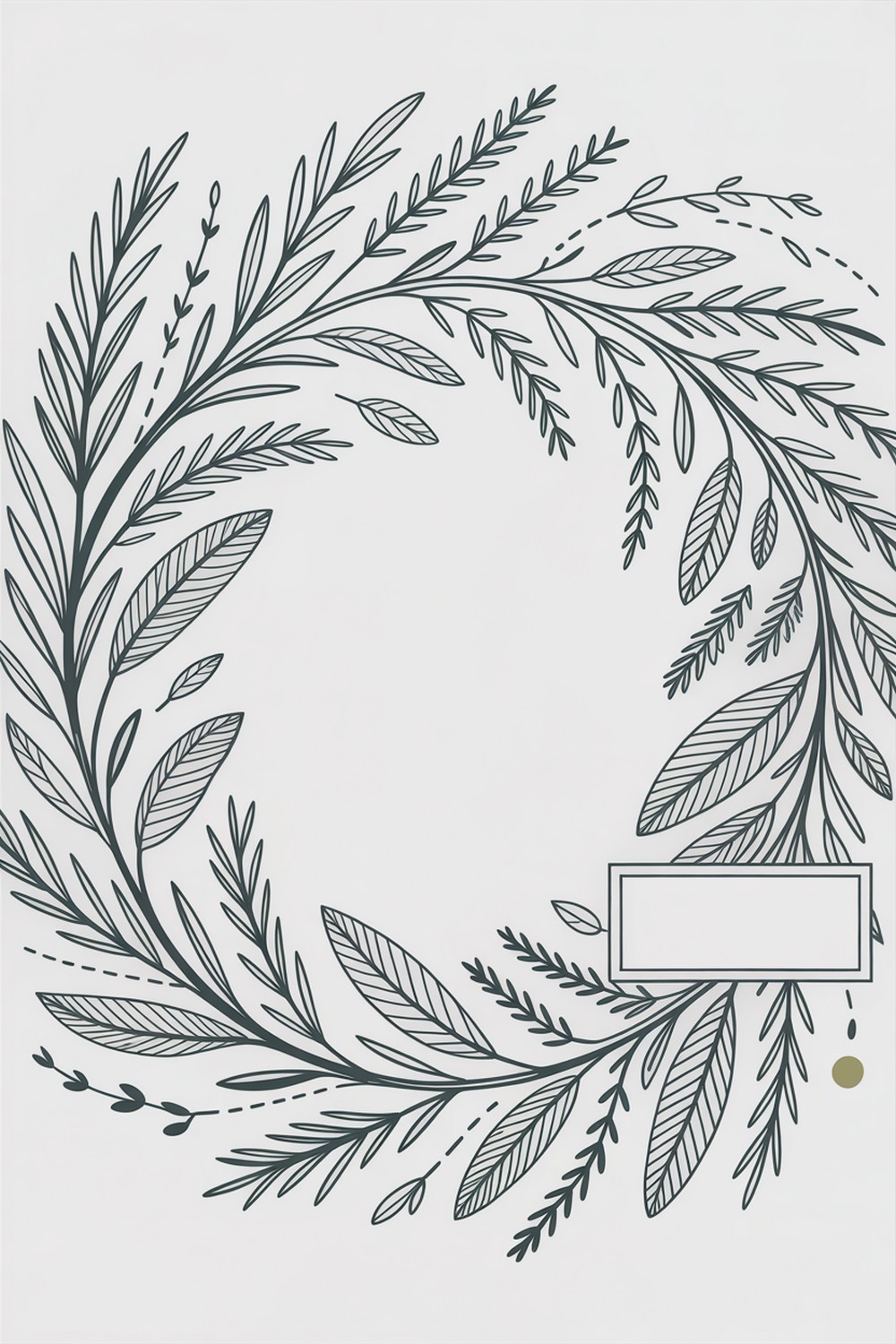
Compose a circular wreath of culinary stems—rosemary, thyme, sage, and bay—balanced in four repeating arcs. For Botanical Line Art, alternate needle-like leaves with broader ovals to maintain rhythm. Keep the circle’s ghost guideline faint; commit to clean, uninterrupted curves for the main ring. Layer sprigs on the outer third, leaving the inner ring open for breath. Add restrained crosshatching where stems intersect to suggest depth. Tie ends with twine implied by three parallel lines and a small loop. Avoid crowding; let asymmetry shape natural charm.
Fern Fronds Botanical Line Art
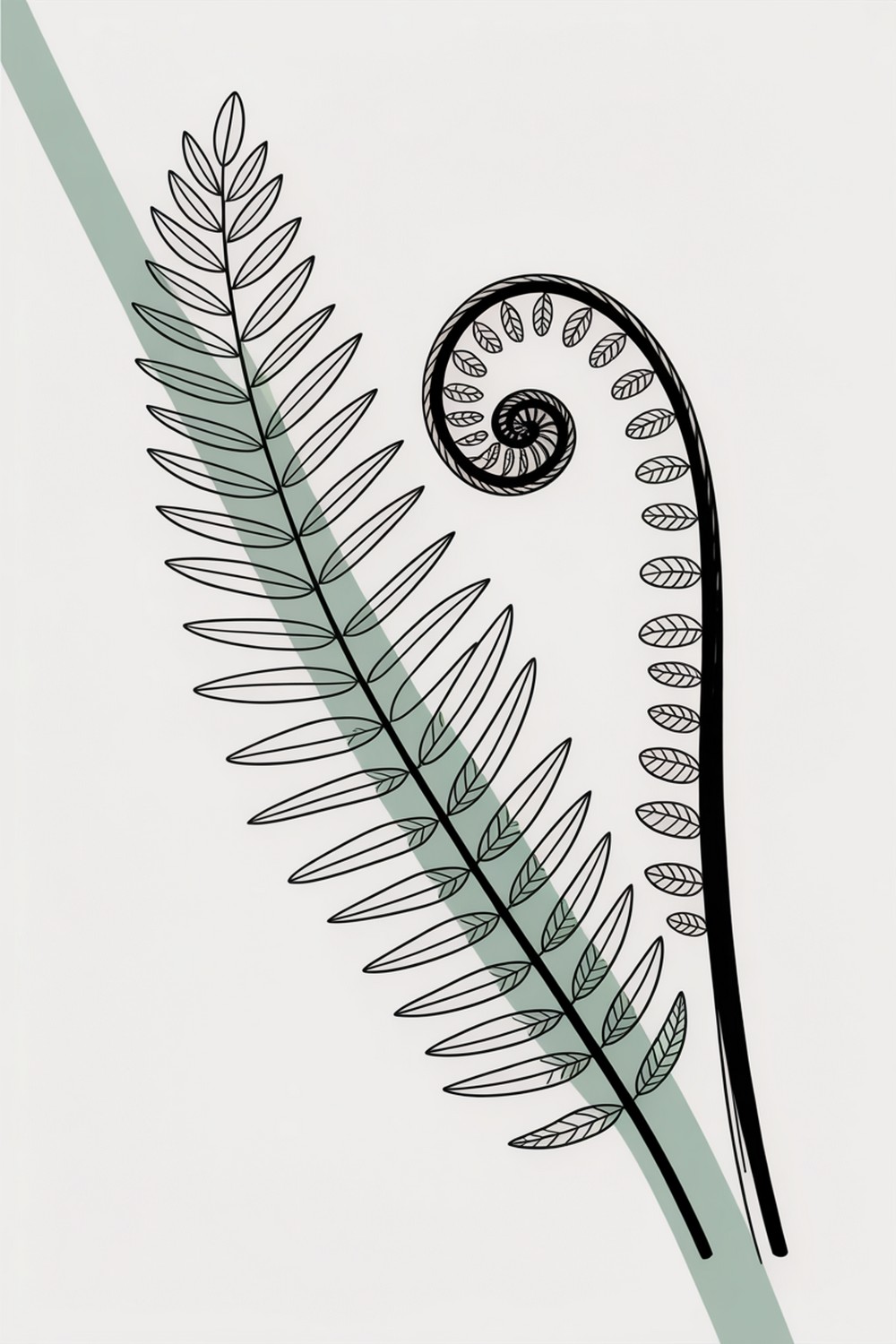
Draw a pair of unfurling fern fronds side by side, one mature and one fiddlehead. Botanical Line Art comes alive through repetition and taper: define the rachis, then place pinnae in gradually shrinking sequence. Keep pinna edges crisp on the near side, softer within the interior linework. Use rhythmic spacing—slightly irregular gaps convey growth. A few dotted spores along the underside of select pinnae add specificity without clutter. The fiddlehead spirals with even arcs, its interior shaded by sparse, directional hatches to suggest tight curl.
Desert Succulents Botanical Line Art
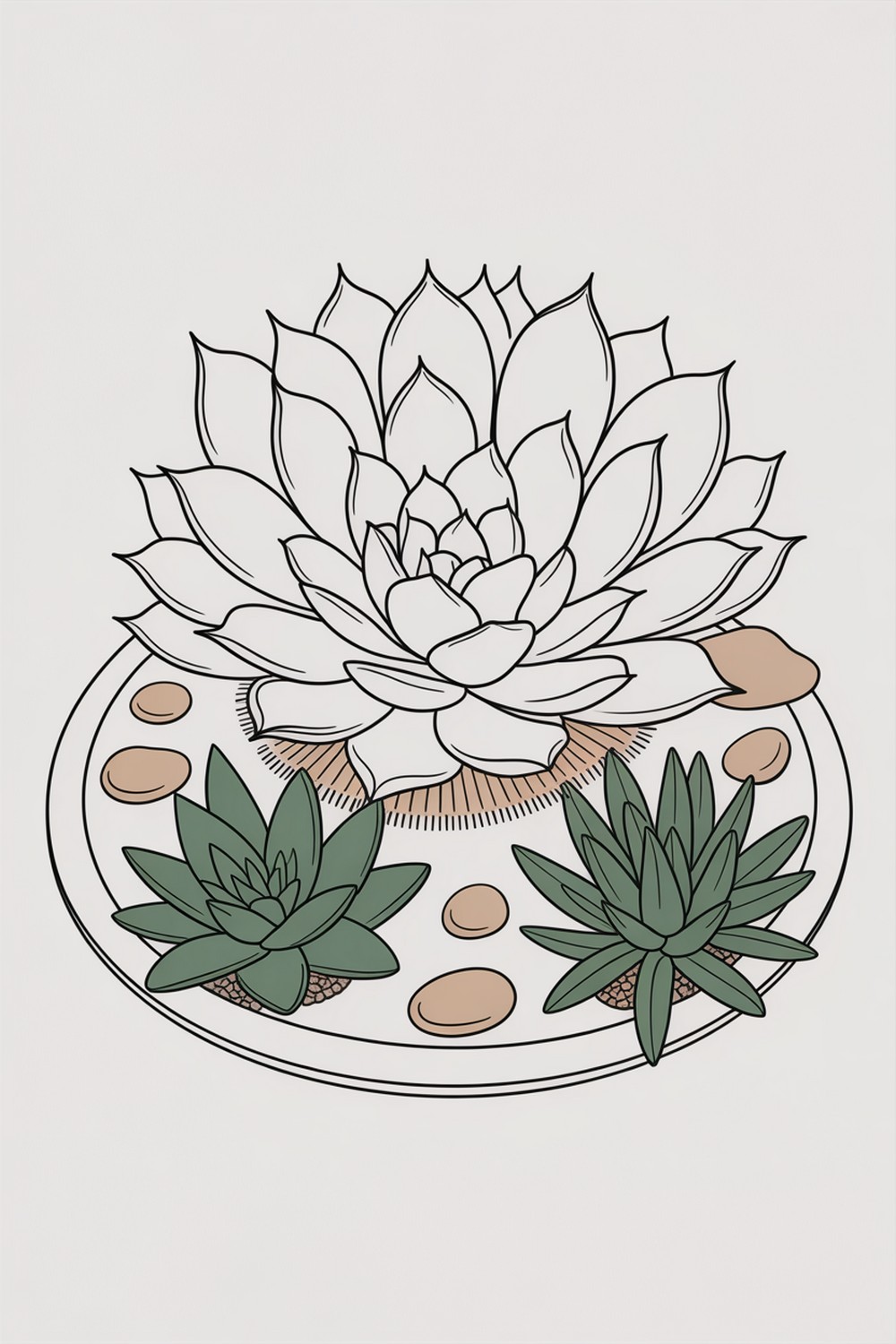
Arrange an echeveria rosette with two small haworthia offsets at the base. In Botanical Line Art, structure first: sketch concentric ovals for the rosette, then place petals with slight overlaps and tapered tips. Keep petal contours smooth, reserving thin, broken hatches near bases for depth. Haworthia leaves get faint, diagonal striping, but only a few lines to avoid noise. Add a shallow planter ellipse beneath with minimal shading. A scattering of pebbles—just seven or eight dots and ovals—grounds the arrangement without stealing the spotlight.
Vintage Botanical Plate Botanical Line Art
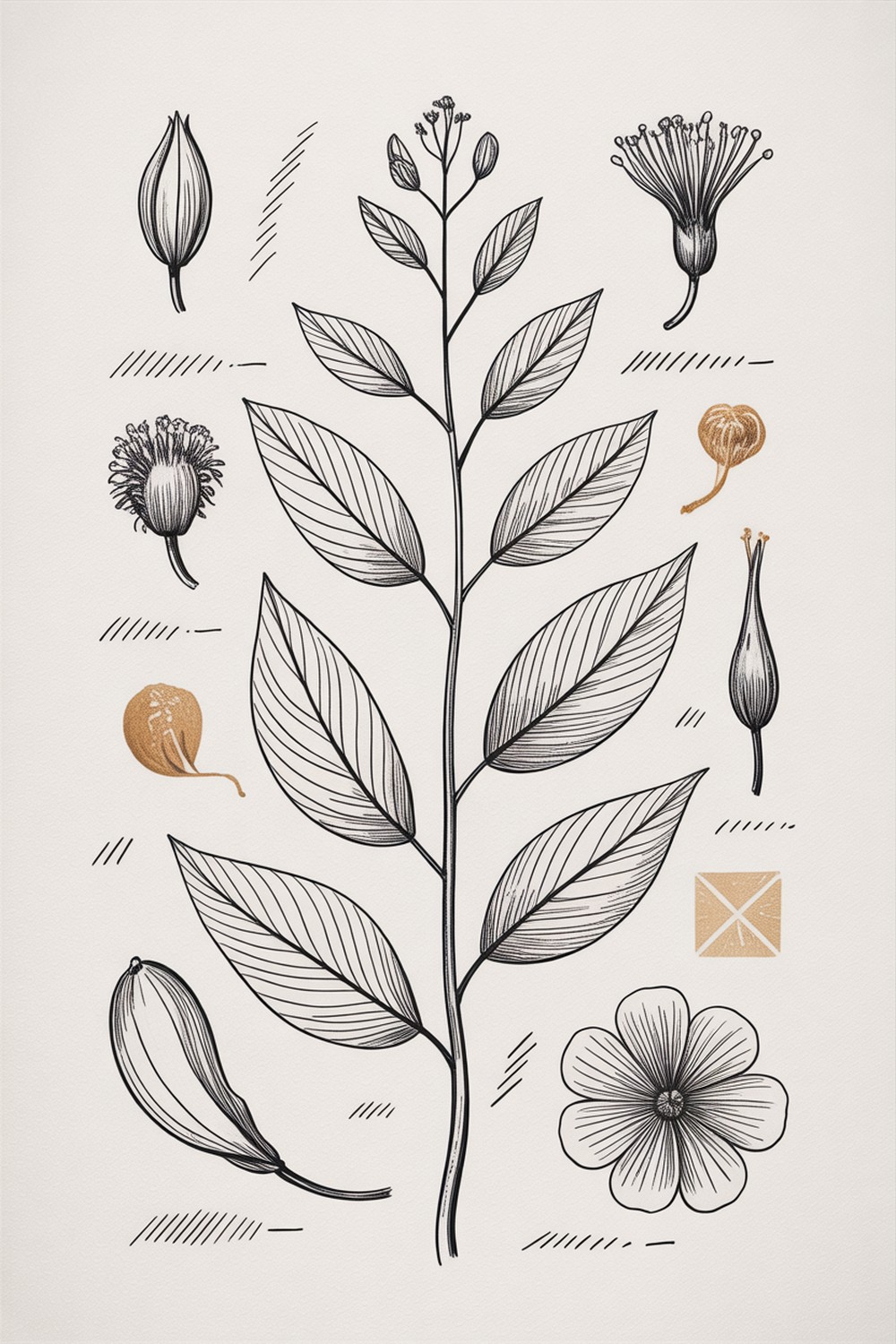
Create a specimen-style plate: a main stem with labeled leaf, bud, flower, and seed pod studies. Botanical Line Art thrives on precision—use consistent line weight across parts, then emphasize focal edges with subtle thickening. Position each study in its own breathing zone, connected by hairline dotted leaders. Titles in tiny handwritten script keep authenticity. Add a small scale bar and a neat plate number. Avoid heavy shading; rely on crisp contours and sparse interior hatching to explain form, honoring the calm clarity of historical engravings.
Peony Bloom Cutaway Botanical Line Art

Show a peony in three states: tight bud, half-open, and cross-section. For Botanical Line Art, use petal stacks to express volume—outer petals drawn bolder, inner layers with lighter touch. The cross-section reveals stamens as clustered filaments, suggested by short, radiating lines around a central disc. Calyx sepals stay simpler to frame the complexity. Keep stems slightly curved and leaves broad with faint midrib hatching. Place forms in a gentle diagonal to guide the eye, preserving quiet space around each stage for balance.
Hanging Houseplants Botanical Line Art
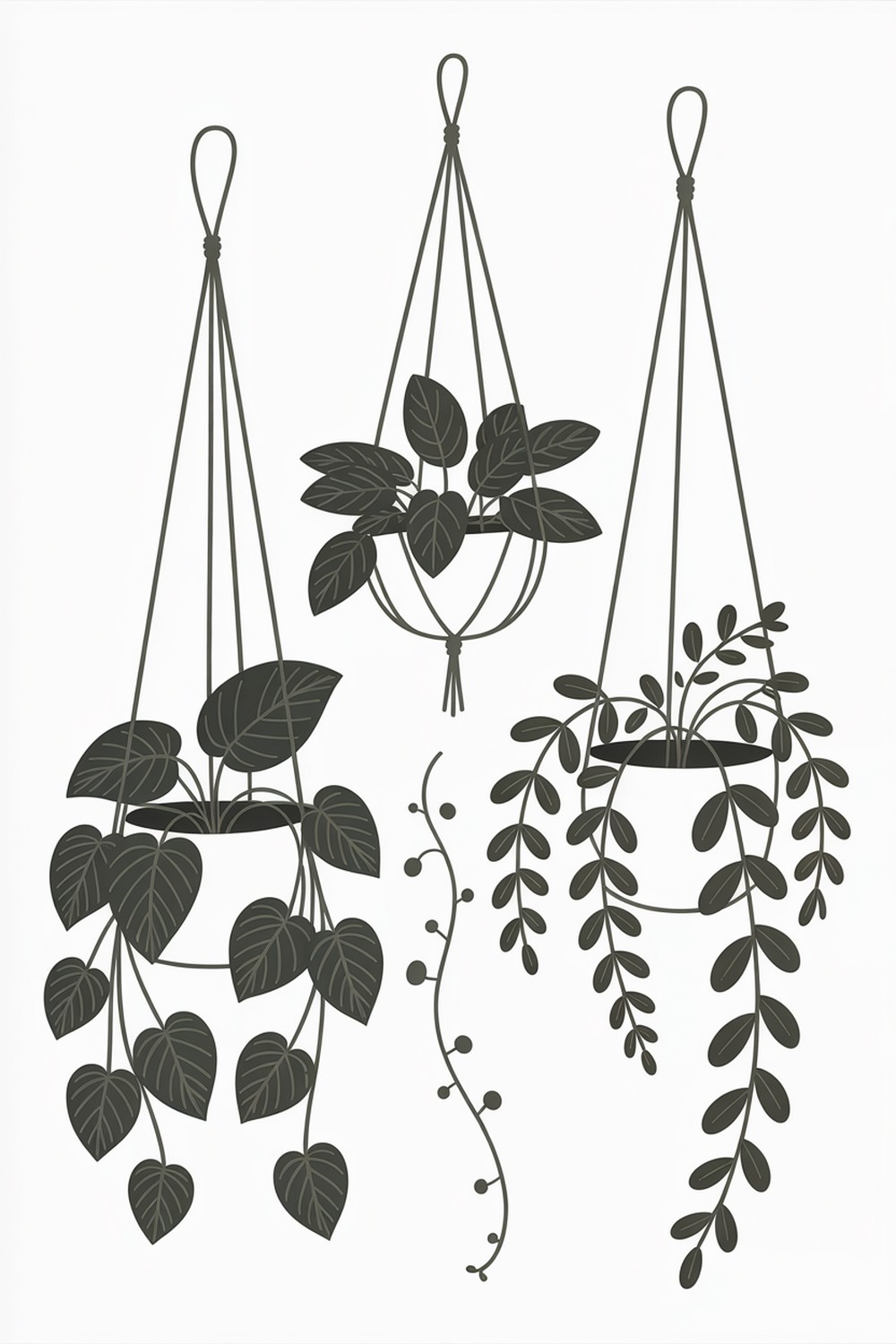
Design a trio of hanging pots: pothos, string of pearls, and trailing philodendron. Botanical Line Art benefits from gravity-led gesture—let vines arc downward naturally, thinning as they descend. Draw pot shapes with clean ellipses and a single, confident rim line. Suggest beads of string-of-pearls with spaced circles, skipping every third bead to avoid a chain look. Leaves overlap sparingly; leave gaps so strands read clearly. Use three fine lines to suggest macramé cords, keeping knots minimal. Finish with tiny, tapered shadows under select leaves for lift.
Woodland Mushrooms Botanical Line Art

Place three mushrooms at varied heights—one cap-front profile, one three-quarter, one from below. In Botanical Line Art, cap silhouettes deliver character; keep edges smooth with slight undulations. Gills are hinted by evenly spaced, tapered strokes that fade toward the rim. Stems get subtle, vertical hatching to suggest roundness. Add two fern tips and leaf litter outlines for context, staying light to protect the caps as focal points. A tiny beetle silhouette near the base adds scale and a touch of woodland narrative.
Seasonal Branch Study Botanical Line Art
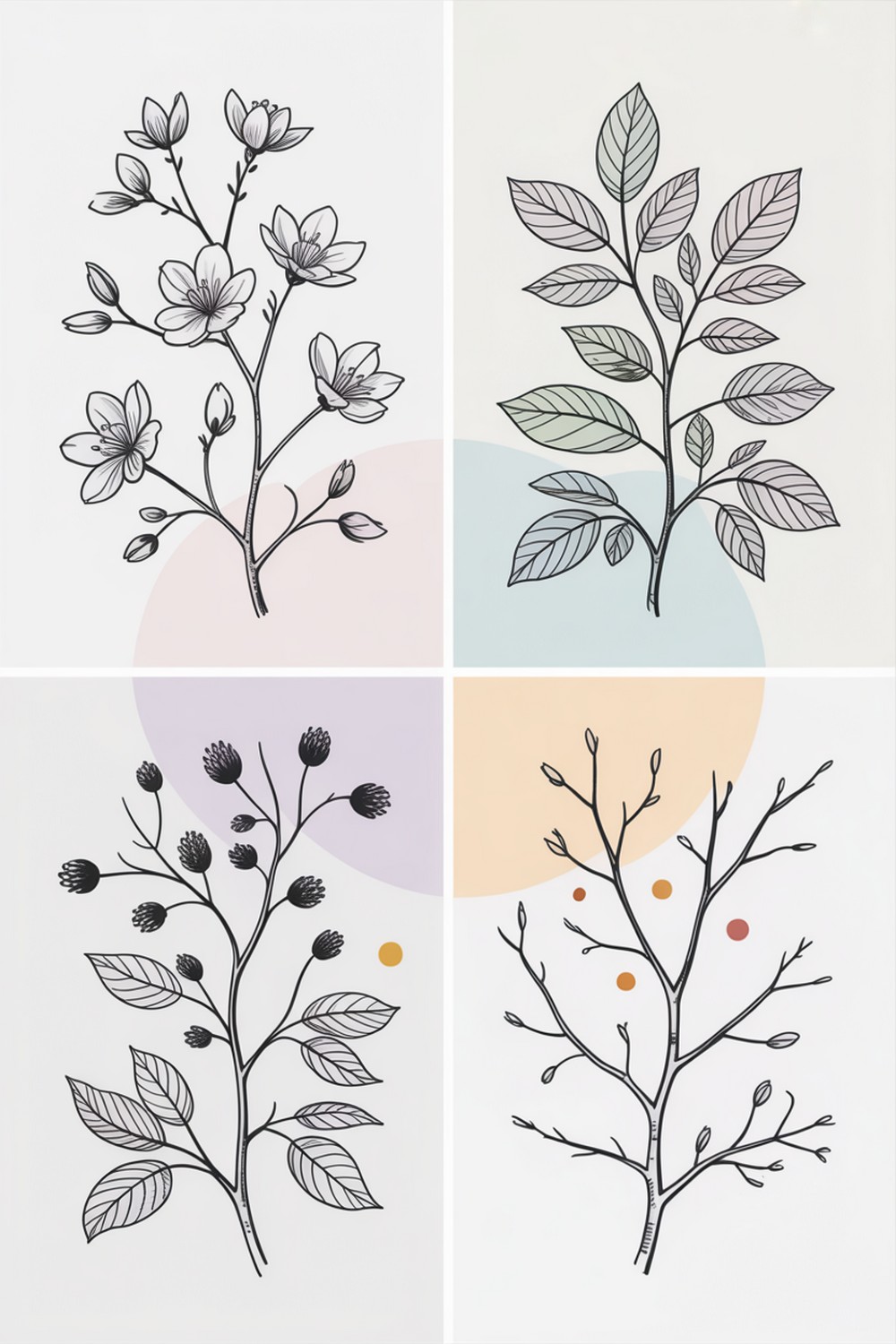
Arrange four branch snippets in a grid: spring blossom, summer full leaf, autumn seed cluster, winter bare twig. Botanical Line Art rewards restraint; use crisp contours and let the paper hold light. Blossom petals get soft interior lines; summer leaves show a few secondary veins, nothing more. Autumn’s seeds hang with thin pedicels; winter’s twig shows slight knuckle textures via tiny dashes. Keep equal spacing and quiet margins. Add discreet, handwritten labels under each quadrant to complete a clean, modern study.
Conclusion
Botanical line art invites you to slow down, notice structure, and let simple lines carry nuance. Prioritize clear contours, varied pressure, and purposeful negative space. Cluster detail where it matters, then back away. Use labels, light hatching, and gentle asymmetry for refinement. Build a series by repeating formats—grids, wreaths, plates—so each drawing feels related. Keep tools uncluttered, paper bright, and edits brave. Most importantly, follow plant gesture first; accuracy and elegance will flow from that patient attention.