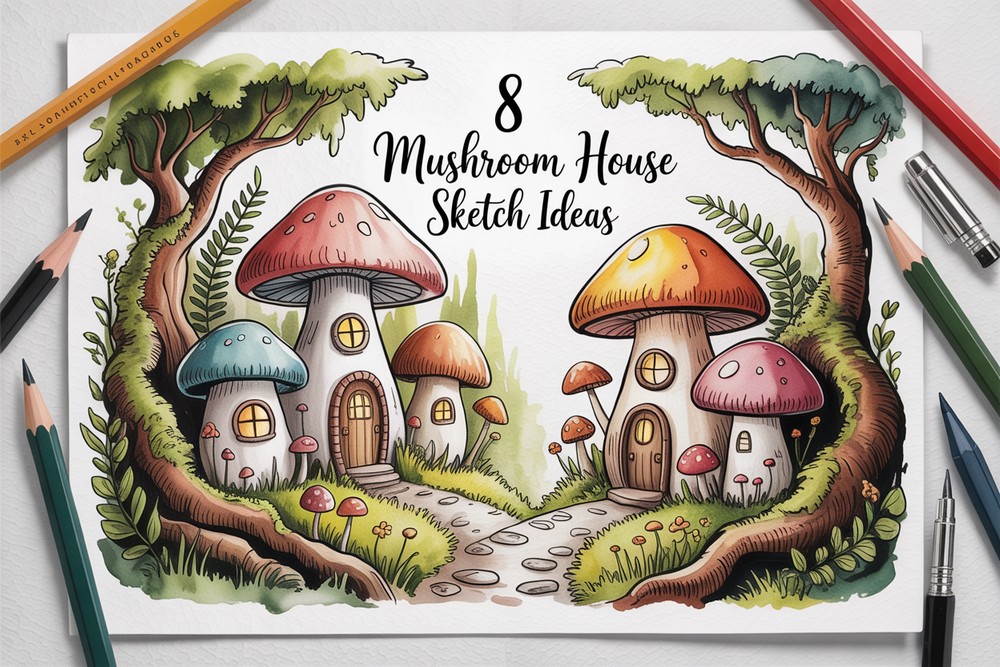
8 Mushroom House Sketch Ideas
Mushroom House Sketches blend whimsy with believable structure, turning forests into little neighborhoods of cap roofs, knobby chimneys, and glowing windows. This guide gives you eight focused concepts so each page feels fresh, readable, and charming. Expect simple perspective cues, thoughtful textures, and small storytelling props that sell scale. Keep tools lean—pencil, fineliner, and a small brush pen for shadows. Work from big shapes to tiny details, letting negative space breathe. Ultra high quality comes from confident lines, clean silhouettes, and selective, crisp accents where the eye should rest.
Add Quick List
- Woodland Stump Mushroom House Sketches
- Teapot-Inspired Mushroom House Sketches
- Cliffside Cluster Mushroom House Sketches
- Lantern Glow Night Mushroom House Sketches
- Market Square Mushroom House Sketches
- Riverside Dock Mushroom House Sketches
- Treetop Bridge Mushroom House Sketches
- Winter Snowcap Mushroom House Sketches
Woodland Stump Mushroom House Sketches
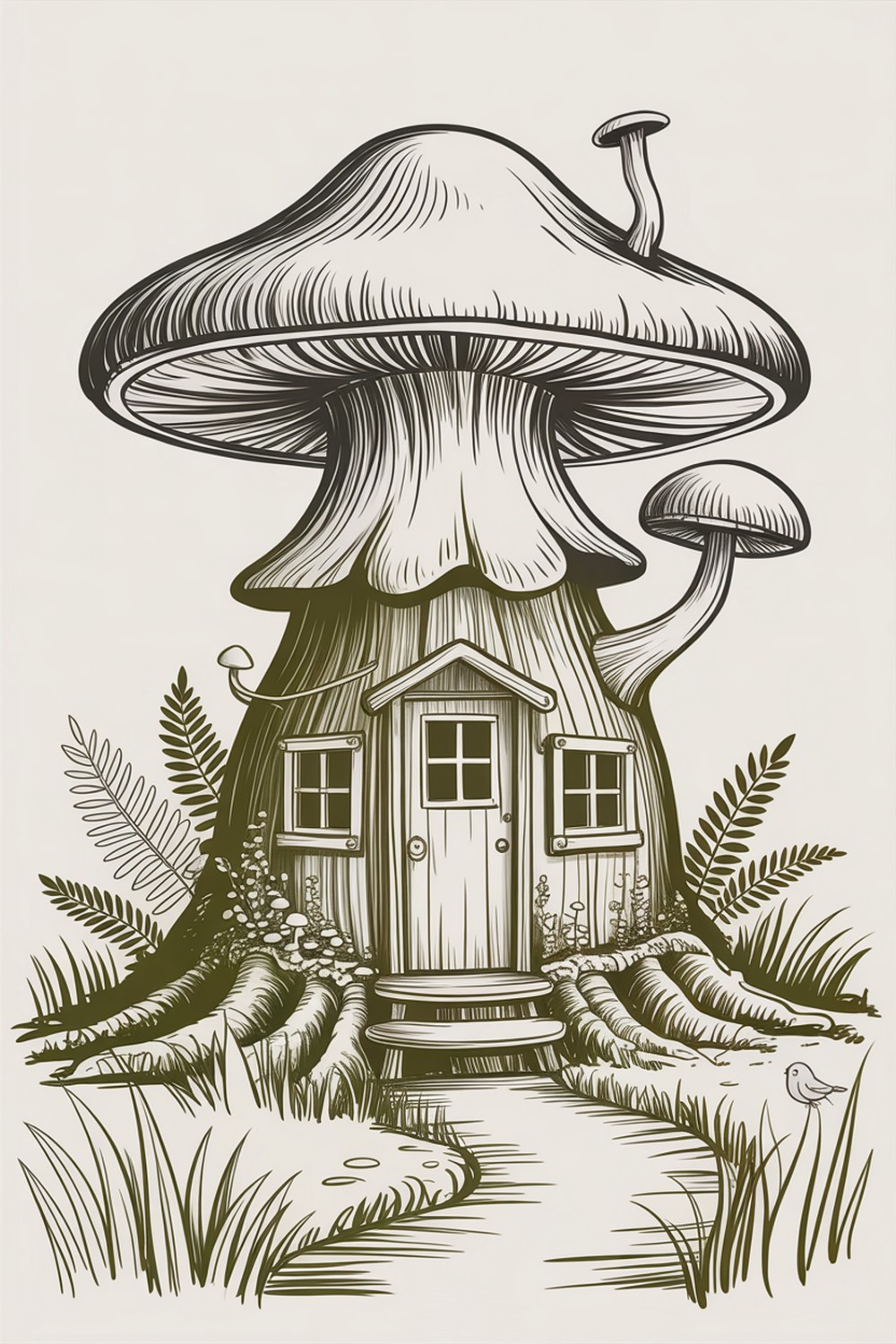
Anchor your Mushroom House Sketches in a hollow stump topped by a broad, layered cap forming the roofline. Use two-point perspective for door and window placements, then carve plank textures with alternating short and long strokes. Add moss patches as soft, broken marks along base edges. A ladder of twig rungs suggests scale and resident size. Keep the chimney a slender, curved tube piercing the cap. Reserve clean whites for window panes, and deepen shadows under the roof overhang to ground the structure convincingly.
Teapot-Inspired Mushroom House Sketches
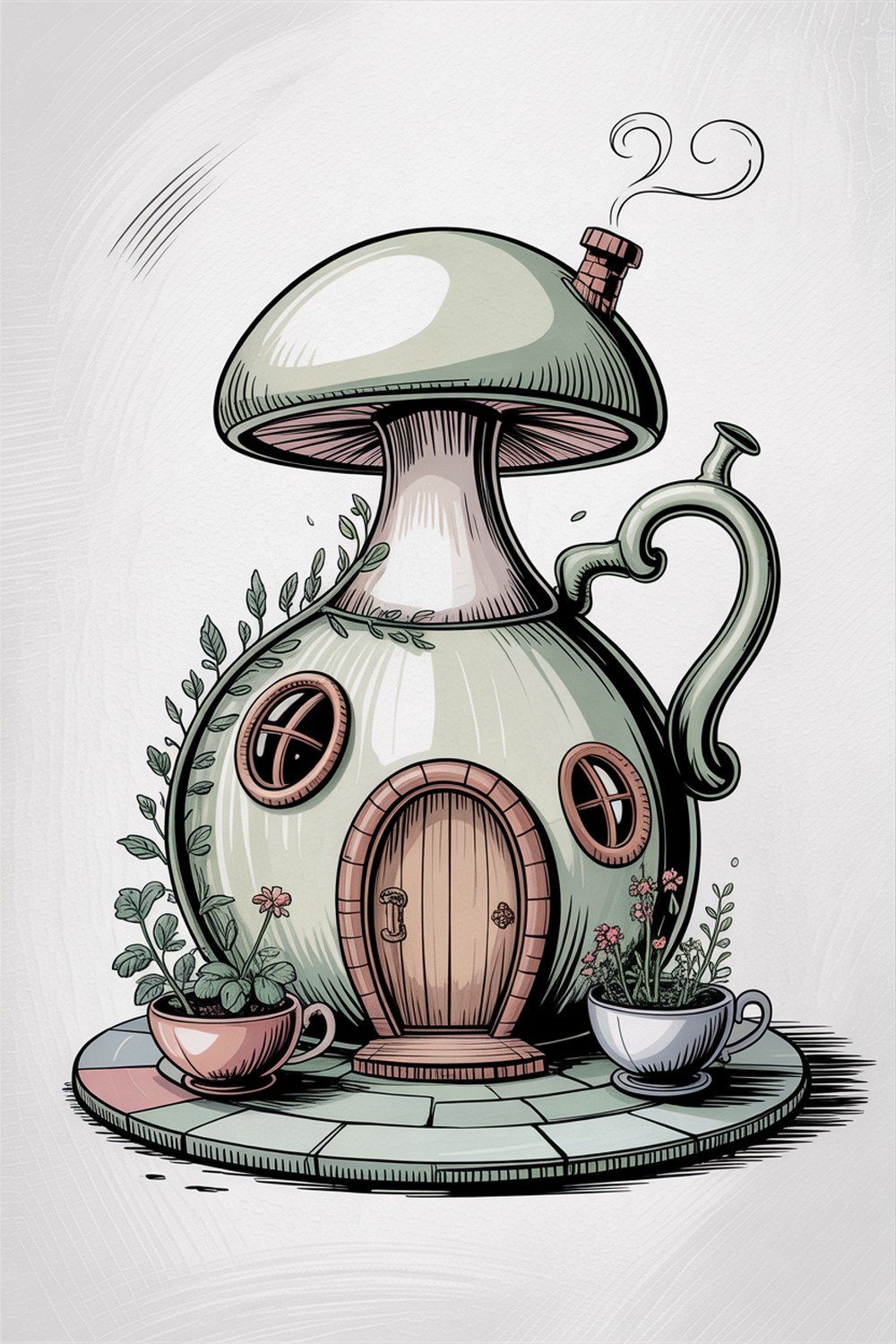
Blend domestic charm and fantasy by shaping Mushroom House Sketches like a teapot: cap as domed lid, spout as a rain gutter, handle as a vine-wrapped stair. Start with a simple ellipsoid body, then seat the cap with a subtle lip shadow. Cut a round door where a teapot lid would lift, adding hinge plates and a keyhole. Let vents and portholes follow the curve. Keep textures gentle—few crosshatches, mostly contour lines—so the silhouette stays readable and the playful profile does the storytelling.
Cliffside Cluster Mushroom House Sketches
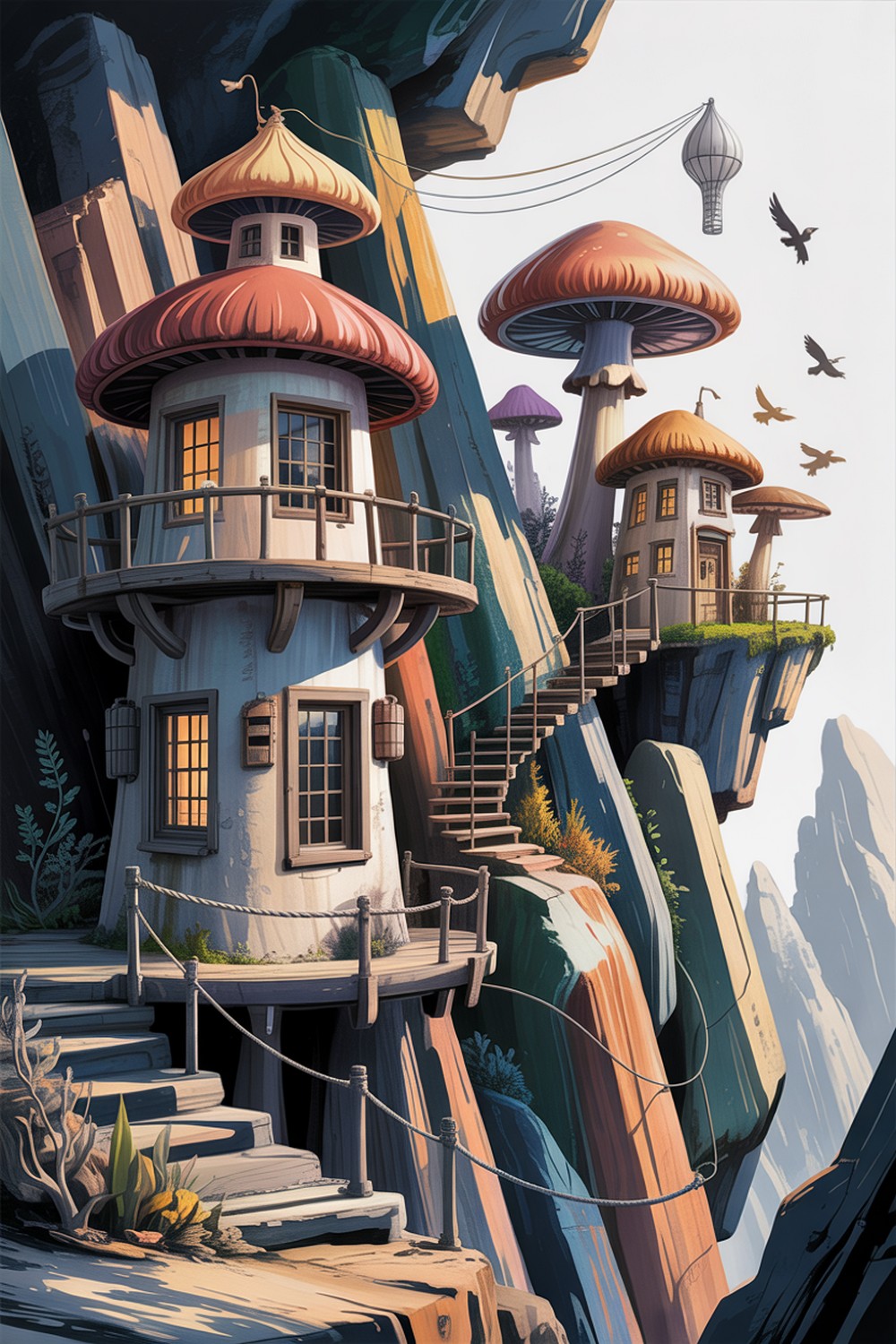
Stack Mushroom House Sketches along a rocky escarpment, caps overlapping like balconies. Map the cliff with bold, angular planes, then nest stems into crevices. Use tiered stairways, rope rails, and pulley baskets to connect levels. Keep distant houses lighter with fewer details; save crisp window mullions and door hardware for the nearest tier. Suggest dripping mineral stains below gutters to integrate buildings with stone. A small lookout deck with a wind sock adds life, while birds circling give scale and airy depth.
Lantern Glow Night Mushroom House Sketches
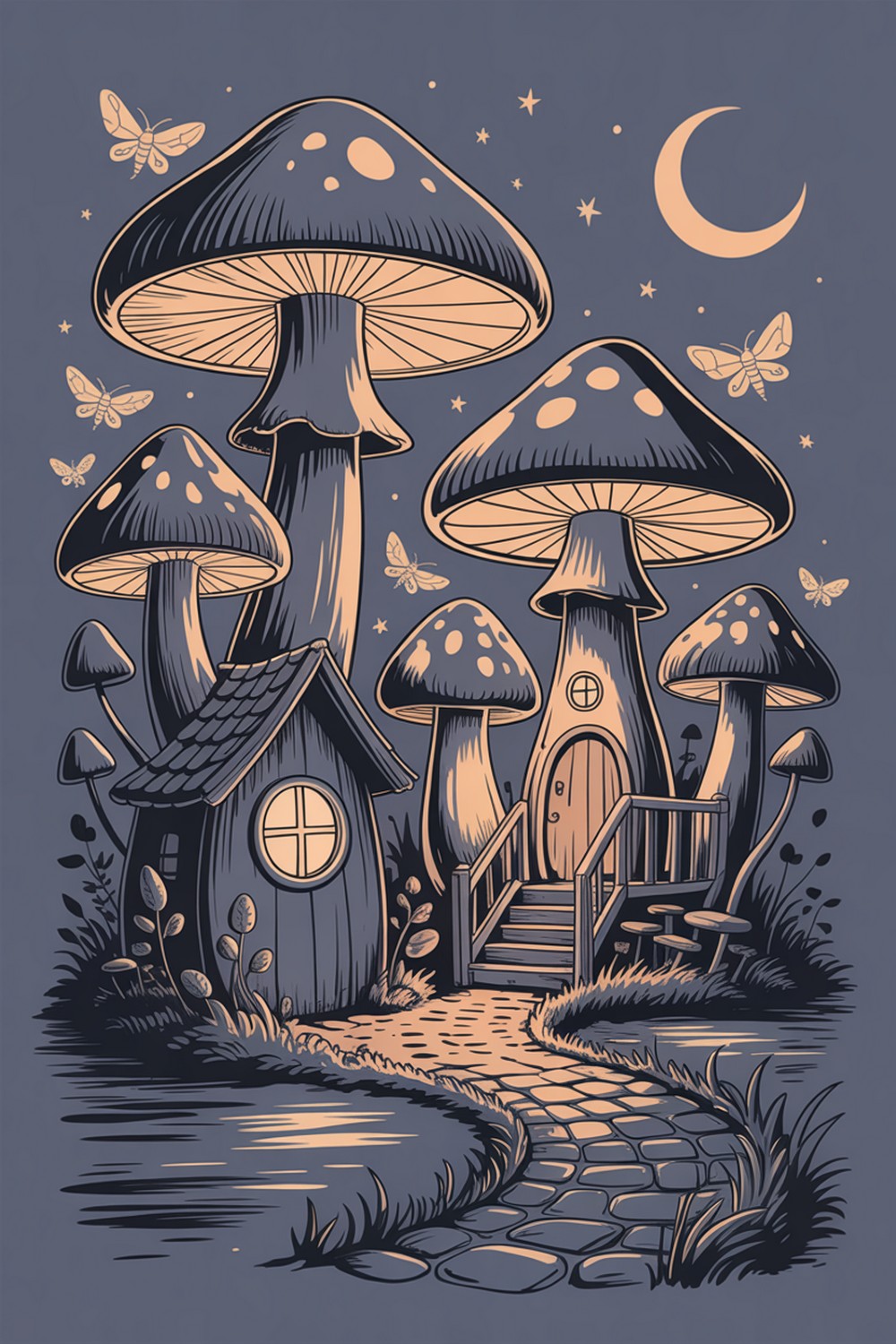
Design Mushroom House Sketches that bloom after dark, reading like gentle lanterns. Outline houses with soft, continuous contours, then reserve clear, unshaded window shapes. Indicate interior light with thicker exterior shadow shapes beneath caps, stairs, and eaves. Add tiny moth silhouettes around lamps and a cobblestone path catching highlights. Keep the sky simple—a crescent moon, a scatter of stars—so the homes remain focal. Use minimal textures; rely on bold, clean shadow blocks and a few sharp highlights for crisp, luminous contrast.
Market Square Mushroom House Sketches
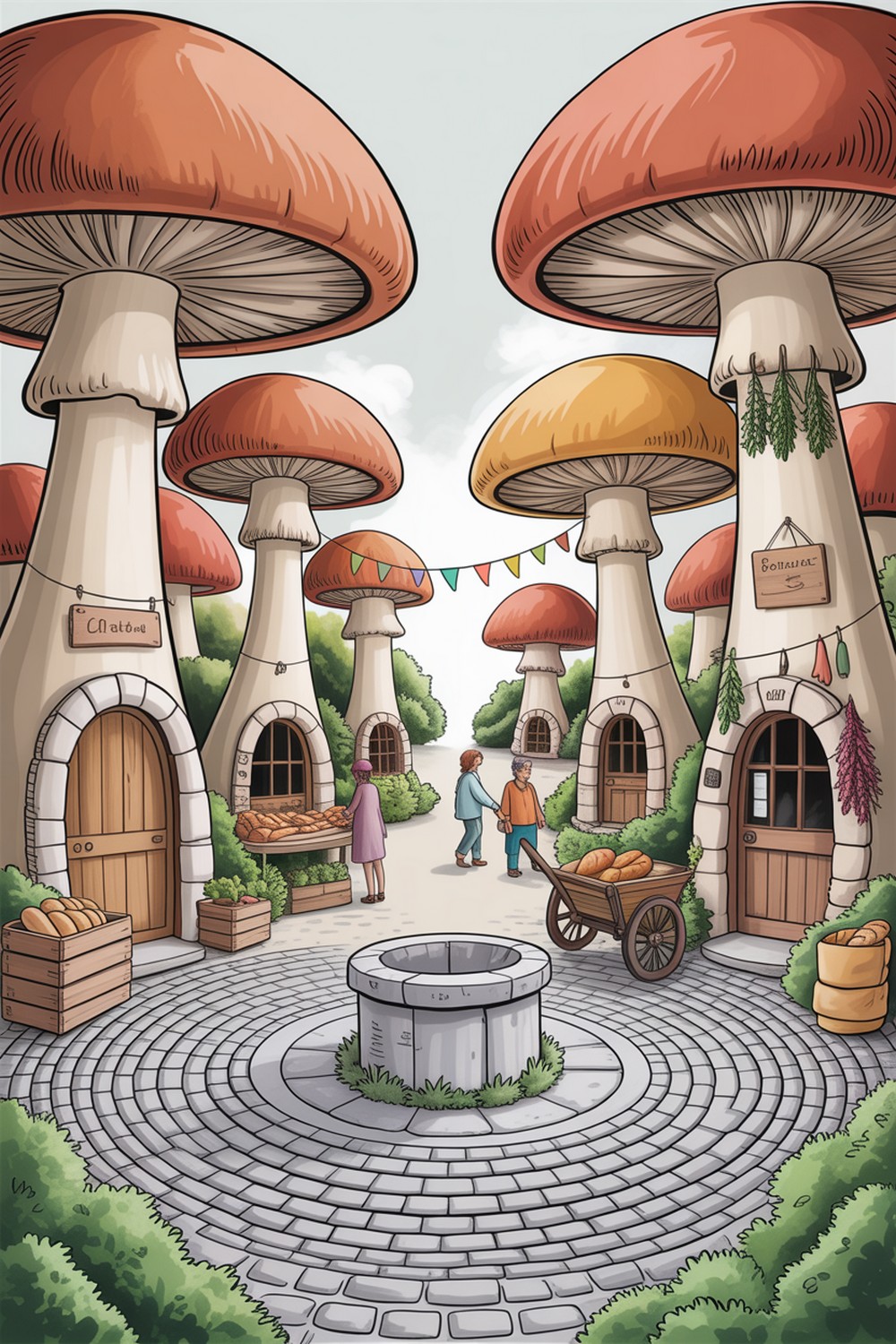
Turn a clearing into a bustling hub by arranging Mushroom House Sketches around a circular plaza. Plan vendor stalls beneath smaller caps, with bunting strings connecting stems. Keep perspective radial: cobbles curve around a central well. Repeat rounded door shapes for cohesion, varying hardware and signage. Populate lightly—two or three figures, a handcart, stacked crates—to avoid clutter. Add hanging herbs, bread loaves, and lantern hooks for story. Use denser linework near the square’s rim to frame and guide the eye inward.
Riverside Dock Mushroom House Sketches
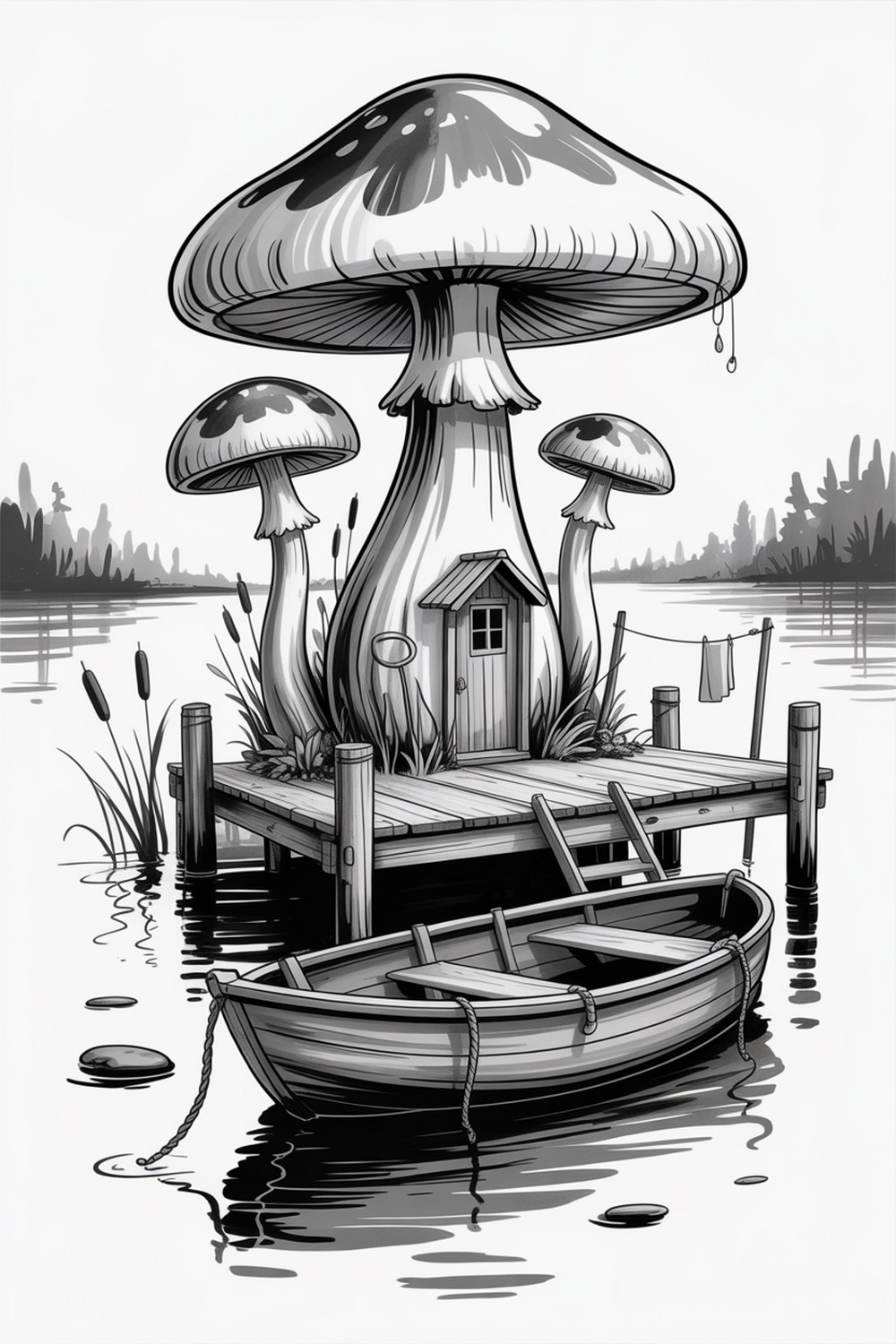
Set Mushroom House Sketches beside a slow stream with a stilted dock, rope cleats, and a flat-bottomed skiff. Begin with broad stem forms, then trim them into pilings by adding ringed texture and wedge shadows. Let the cap roof overhang the water, reflecting as broken shapes—never mirrored perfectly. Sketch reeds and stones with spare marks so the house remains hero. A clothesline between stems adds motion. Keep tonal weight under platforms and along waterline to seat structures firmly in the scene.
Treetop Bridge Mushroom House Sketches
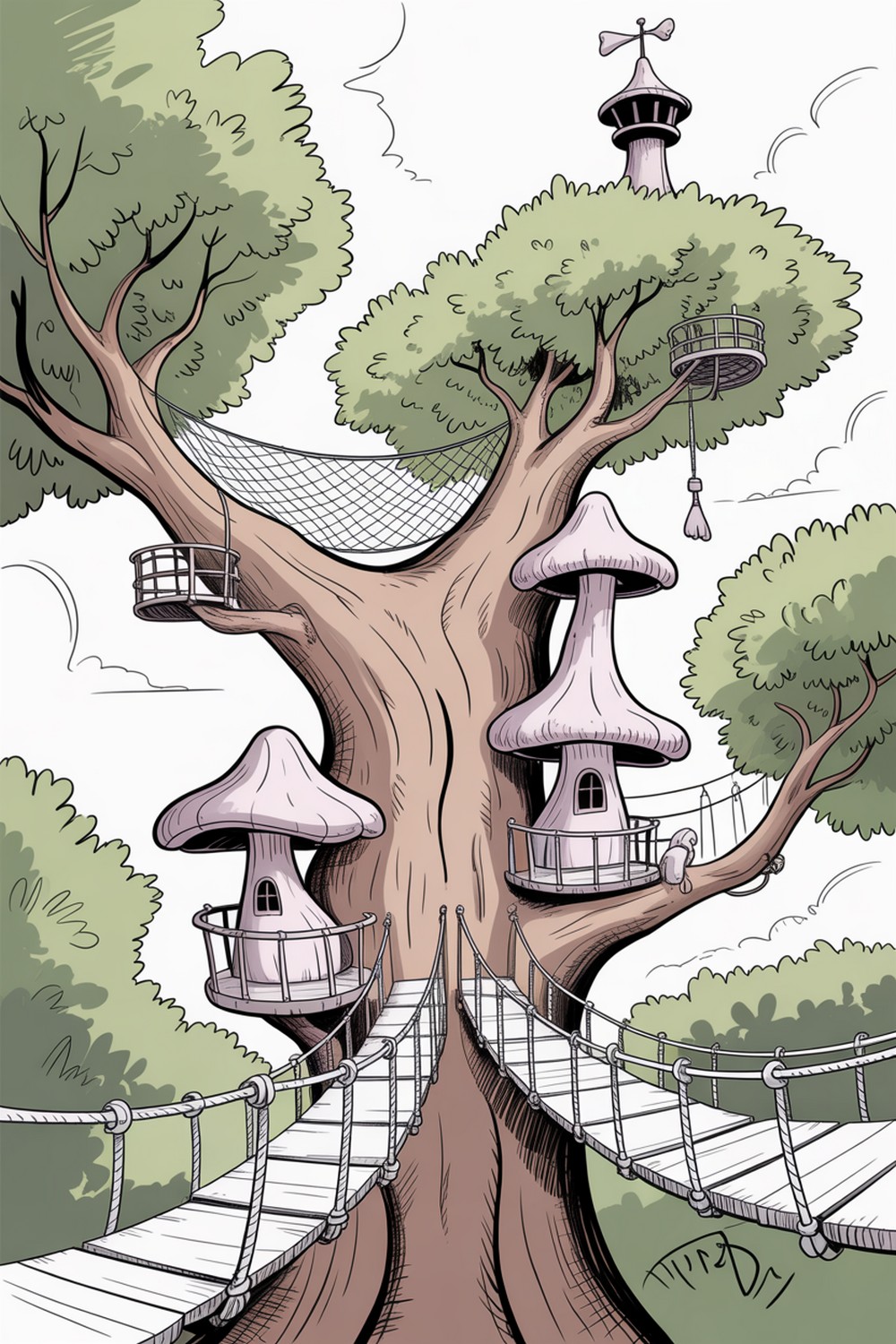
Lift Mushroom House Sketches into the canopy, linking caps with narrow rope bridges and netted walkways. Start with a strong vertical trunk cylinder, then perch stems from pegged brackets. Indicate depth by tapering bridge boards and spacing rope knots closer in the distance. Add a lookout loft, pulley hoist, and a tiny weather vane. Keep foliage massed as soft, rounded silhouettes to avoid stealing attention. Strengthen contact shadows where stems meet bark, and leave sky holes between leaves for sparkling, airy rhythm.
Winter Snowcap Mushroom House Sketches
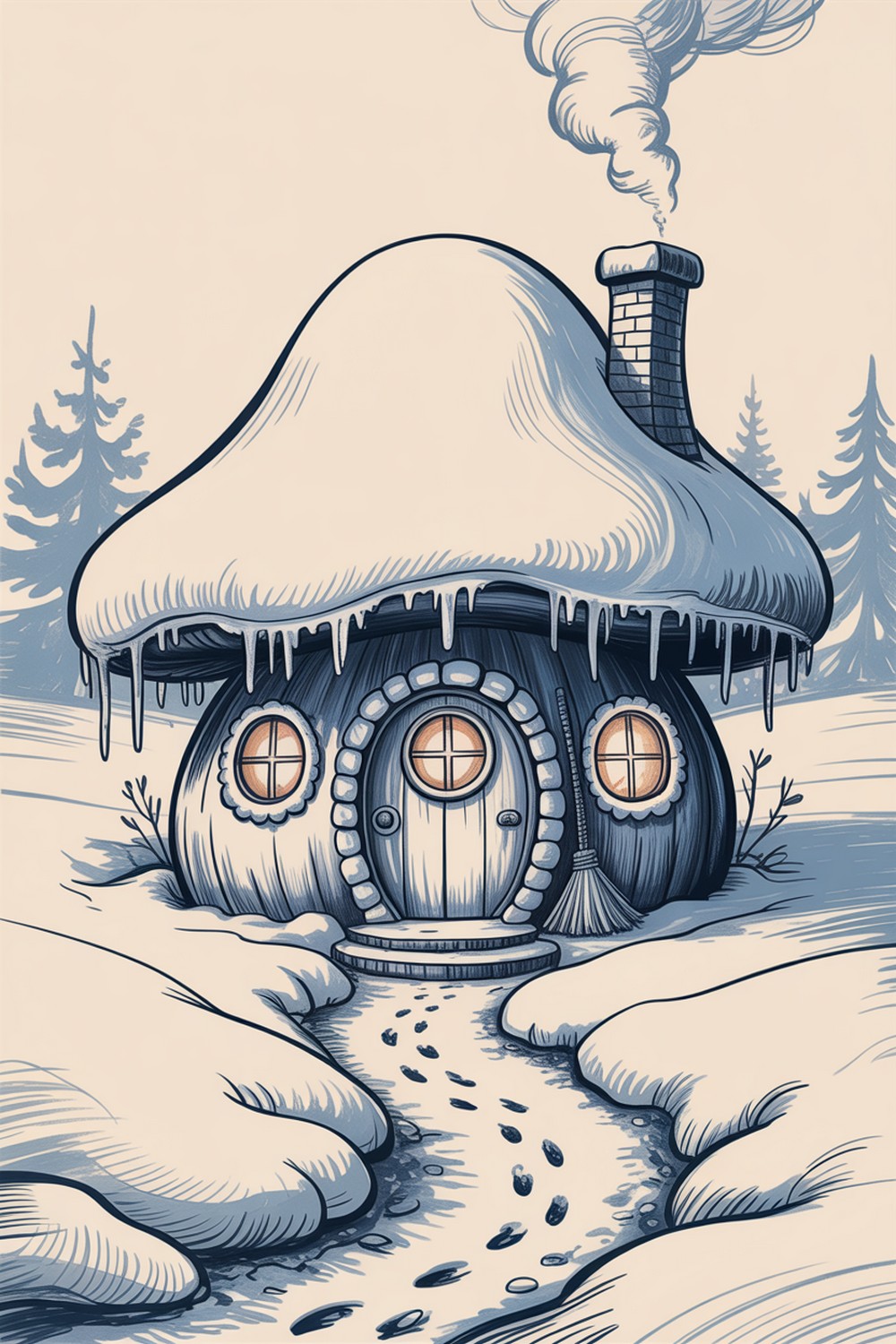
Wrap Mushroom House Sketches in winter hush: thick snow caps drooping over eaves, icicles glinting from gutters. Define snow volume with smooth, convex lines and gentle undershadow bands. Carve paths through drifts with broken footprints leading to a rounded door. Window glow reads brighter against cool shadow fields, so keep walls lightly hatched. A woodpile and a bundled broom add story. Use crisp accents only on icicle tips, door latch, and chimney smoke curls, keeping the rest soft and quiet.
Conclusion
Mushroom House Sketches thrive on strong silhouettes, believable connections to their environments, and selective, well-placed details. Start with clear cap and stem geometry, use perspective to set doors and windows, then add textures that follow form—planks, bark, stone, and moss. Keep values simple: big shadows under caps, small highlights on windows and metal. Suggest life with ladders, clotheslines, lanterns, and pathways. Let backgrounds stay calm so the homes star. Build a series by varying setting, scale, and time of day.