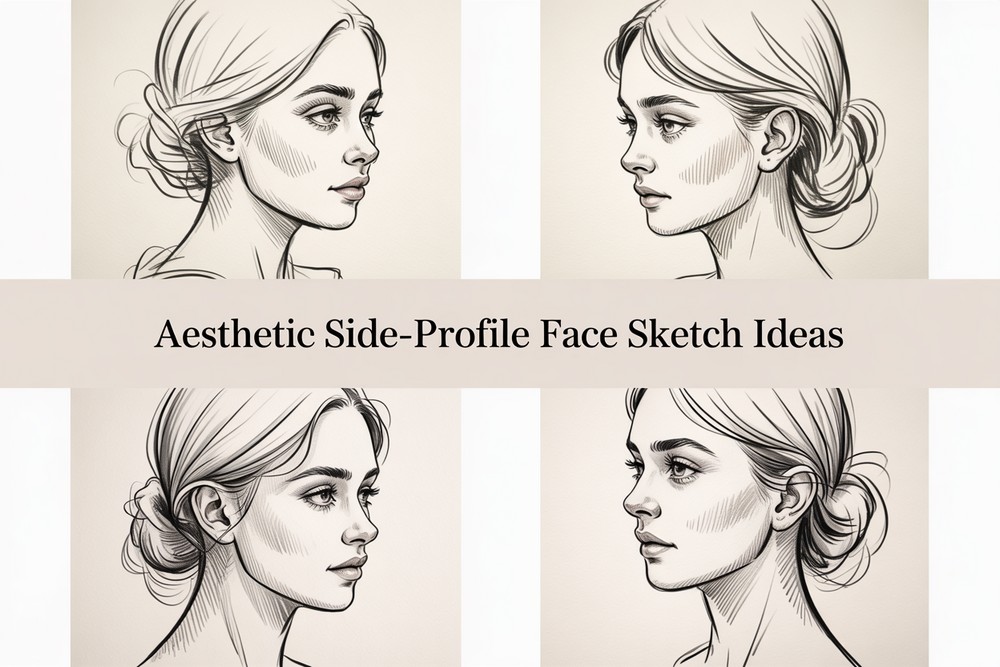
14 Aesthetic Side-Profile Face Sketch Ideas
Aesthetic Side-Profile Face Sketches blend elegant lines, thoughtful proportions, and a sensitive read of light. This guide gives you fourteen focused ideas to design clean, modern profiles that still feel human and emotive. You’ll learn to simplify planes, refine silhouettes, and place detail only where it matters. Work with graphite, fineliner, or charcoal on smooth or lightly toothed paper. Keep your touch light, build decisions intentionally, and let negative space shape the form. Aim for clarity first; embellish only with purpose.
Add Quick
- Silhouette first: designing the elegant profile
- Landmarks and angles: mapping proportion quickly
- Planes and light: sculpting without heavy shading
- Nose, lips, and chin: a graceful front chain
- Eye and lid in profile: subtlety over symbols
- Ear design: form, folds, and simplification
- Hair shapes: graphic masses with soft edges
- Neck and shoulders: gesture that supports the head
- Negative space: carving beauty around the face
- Edge variety: where to sharpen, where to lose
- Stylized minimalism: fewer lines, stronger read
- Soft realism: muted tones and delicate transitions
- Background accents: halos, vignettes, and shapes
- Finishing passes: restraint, polish, and unity
Silhouette first designing the elegant profile
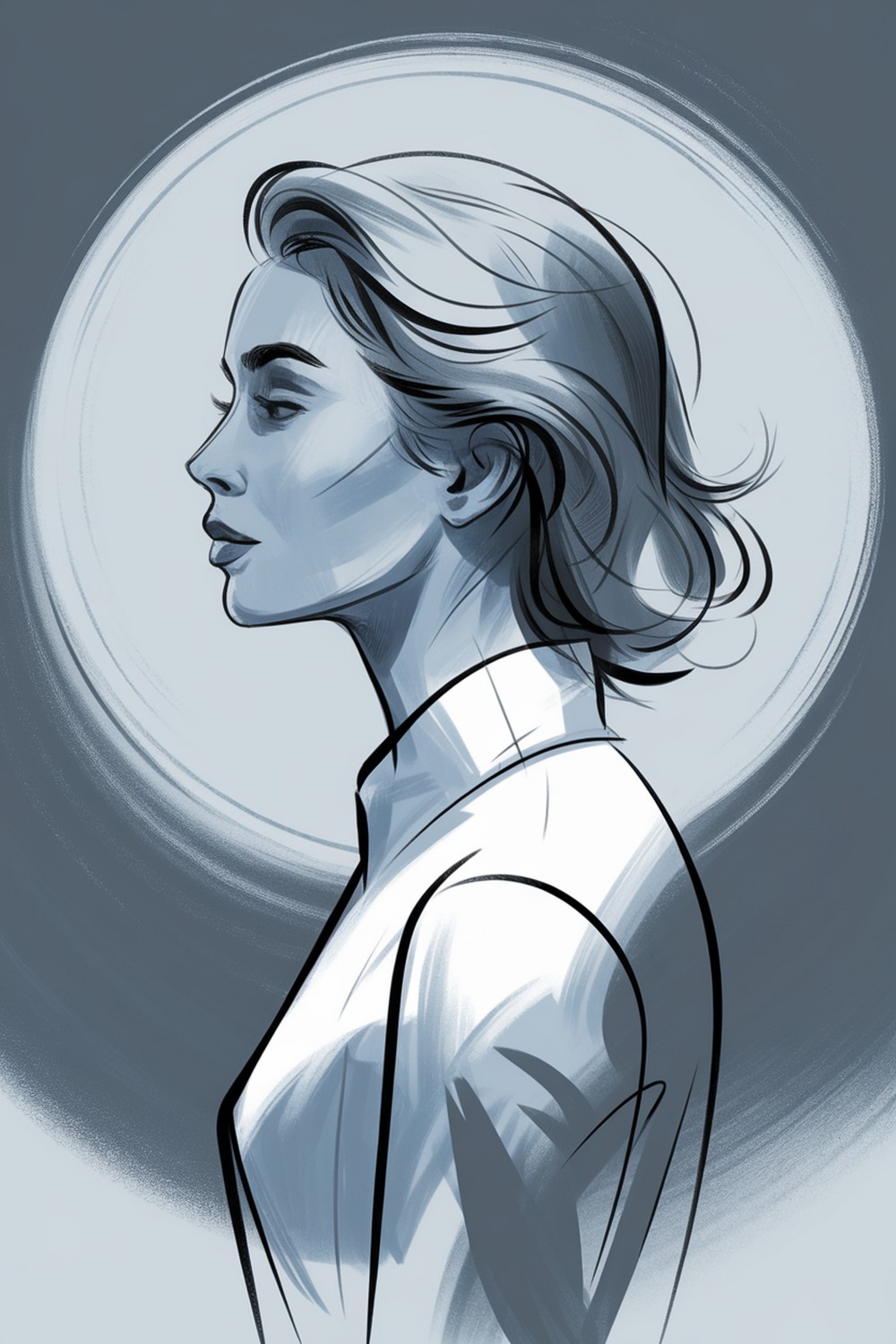
Begin by composing a clean, readable silhouette. Let the forehead slope, nose bridge, lip curve, and chin stack flow as one unbroken contour, then echo that rhythm through the hairline and nape. Squint to compare negative spaces—brow to nose gap, upper lip to nose, chin to neck. Keep corners rounded; avoid angular kinks unless intentional. If likeness wobbles, adjust the outer edge before interior marks. An eloquent silhouette carries identity and mood even before details appear.
Landmarks and angles mapping proportion quickly
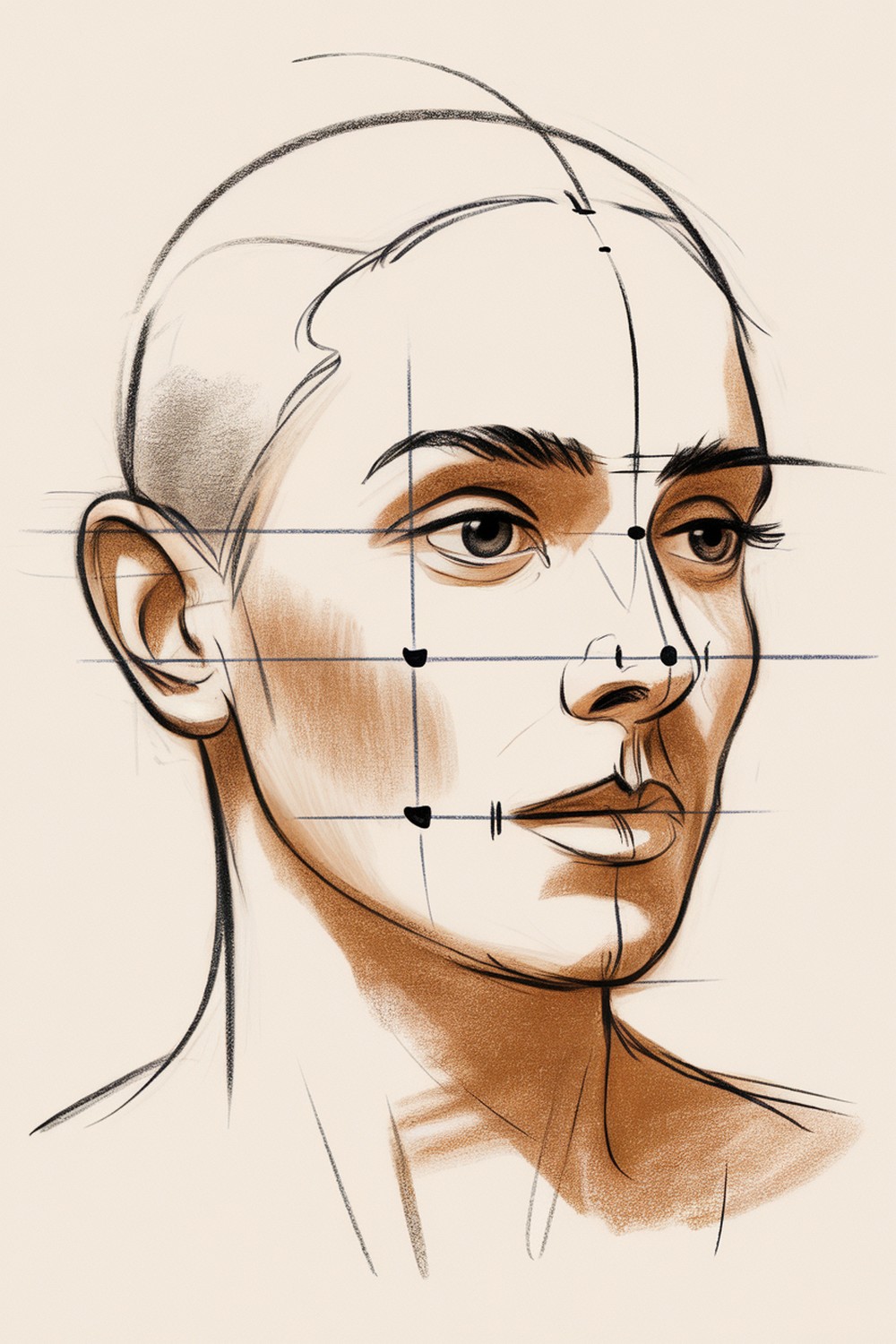
Drop in light construction to place brow ridge, base of nose, mouth opening, and chin plane. Angle-check nose bridge, philtrum, and jawline with short directional ticks. Use the ear height to confirm head tilt; align the corner of the mouth beneath the pupil location projected to profile. Verify distances—hairline to brow, brow to nose, nose to chin—keeping thirds proportional but flexible. These quick anchors prevent drift, letting your later lines land with confidence and accuracy.
Planes and lights culpting without heavy shading

Think in large planes: forehead, temple, nose wedge, muzzle, and chin block. Indicate light with selective tone along the shadow side—beneath the brow, under the nose, below the lower lip, and under the chin. Keep transitions soft, grouping midtones and reserving a few dark accents for nostril core and lip crease. Avoid over-modeling; suggest form with economical hatching that follows plane direction. Consistent light logic turns a flat outline into a believable, dimensional profile.
Nose, lips, and chin a graceful front chain

Treat the nose, lips, and chin as a linked front chain. Let the nose tip and septum flow into a subtle philtrum step, then ride a gentle S-curve across the upper lip to a fuller lower lip. Tuck the lip corners back slightly in space. Separate lips with a soft center line rather than hard outlines. Land the chin with a rounded plane, then retreat into a taper toward the throat. Keep edges refined, not fussy.
Eye and lid in profile subtlety over symbols

Avoid drawing a triangle “eye.” Build the eyeball as a sphere tucked into the socket, with the upper lid making a soft wedge that overlaps the cornea. Suggest the crease with a faint stroke; the lower lid is a plane change, not a dark outline. Keep lashes grouped and minimal, flicked from the lid margin with delicate taper. A tiny highlight on the corneal curve can add life, but keep it consistent with your chosen light direction.
Ear design form, folds, and simplification
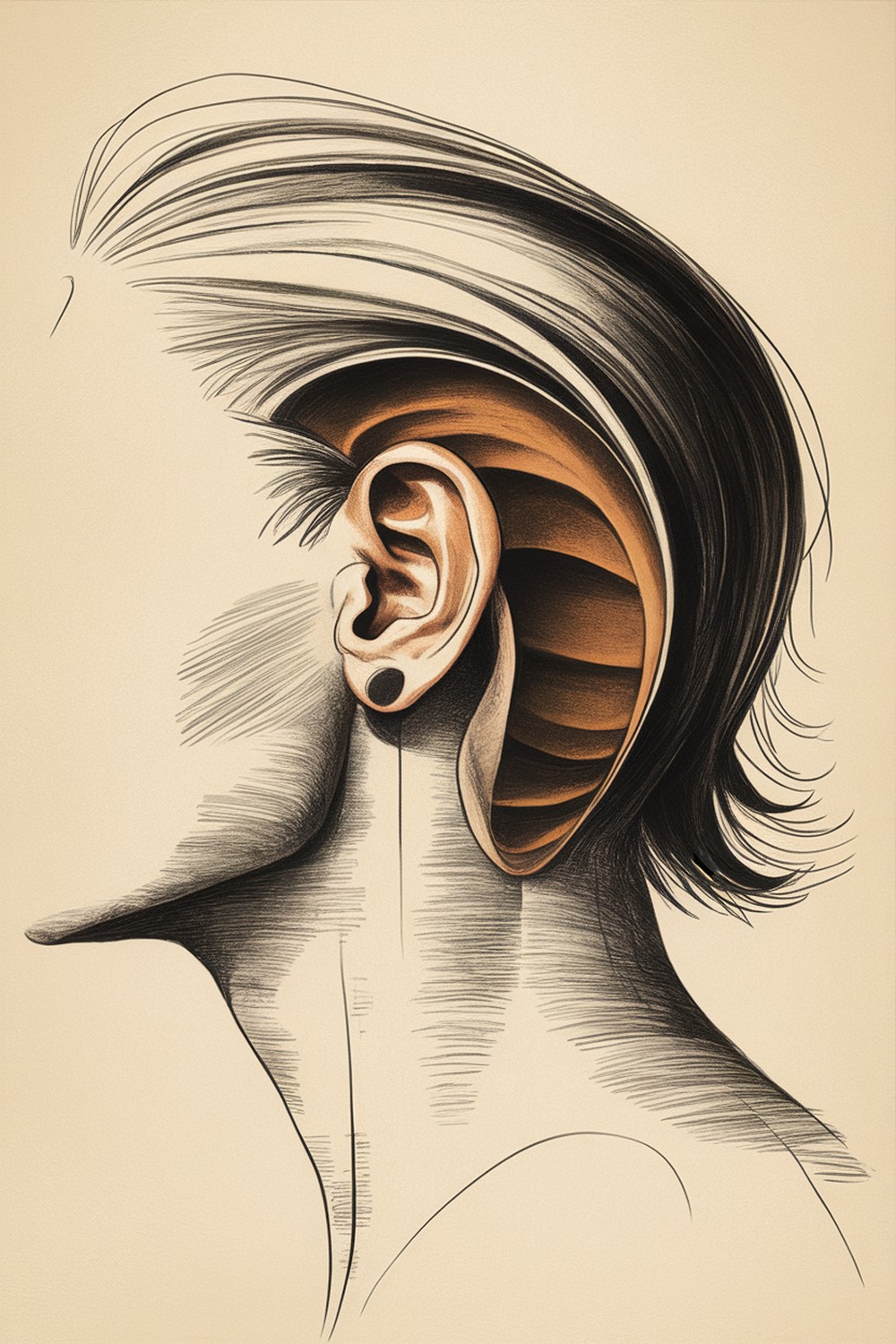
The ear in profile is a sculptural anchor. Block its overall tilt from the brow line to the nose base, then simplify the helix, antihelix, and concha into clear shapes. Use selective darks inside the concha to imply depth; keep the helix edge softer where light grazes. Avoid outlining every fold—suggest with short, directional arcs that follow cartilage flow. The tragus and earlobe should balance the jaw rhythm, supporting likeness without overpowering the face.
Hair shapes graphic masses with soft edges

Design hair as large, flowing masses that frame the profile. Start with a bold outer shape, then carve light with eraser lifts or leave paper white as sheen. Use a handful of internal direction lines to imply flow rather than drawing strands. Feather the hairline into the forehead and temples with broken, airy marks. Keep the darkest darks within inner folds, not at the perimeter. A well-balanced hair silhouette amplifies elegance and clarifies head structure.
Neck and shoulders gesture that supports the head

A convincing profile rests on a graceful neck and shoulder gesture. Sweep the sternocleidomastoid from behind the ear to the clavicle, then echo that curve with an opposing shoulder slope. Keep the neck slightly darker or more continuous to push the facial silhouette forward. Avoid heavy shirt outlines; favor a few quiet cues at the collarbone and seam. When head and torso rhythms agree, the portrait feels poised, grounded, and visually complete without extra detail.
Negative space carving beauty around the face

Design the air as carefully as the face. Shape the triangular gap between nose and upper lip, the notch beneath the lower lip, and the opening between chin and neck. Use background cut-ins to refine contour—one small shape behind the light cheek can make the profile glow. Balance filled and empty zones so the head breathes on the page. Negative space decisions sharpen proportion, heighten elegance, and keep the drawing feeling modern and intentional.
Edge variety where to sharpen, where to lose

Not all edges deserve equal weight. Sharpen where planes flip—nostril core, upper lip crease, under-chin cast shadow, and inner ear cavity. Let soft turns dissolve—cheek into air, forehead into hair, lower lid into cheek. Use pressure control to suggest atmospheric softness without smudging everything flat. Strategic lost-and-found edges create depth, guide attention, and preserve the portrait’s airy calm. Edge design is mood design; choose contrast only where it serves structure and story.
Stylized minimalism fewer lines, stronger read
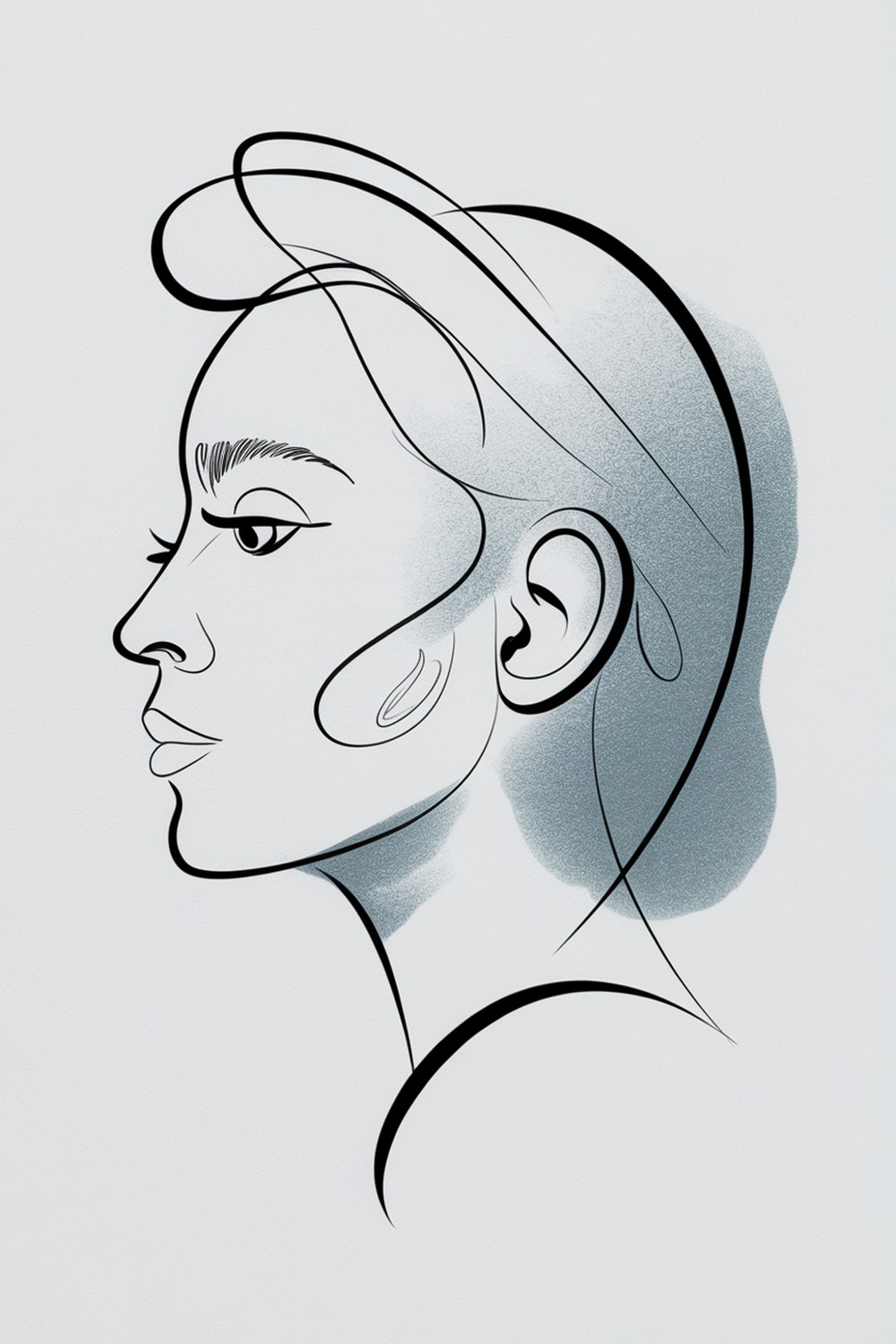
Push elegance by reducing the mark count. Keep a continuous outer contour, a single lid line, a lip center tick, and two or three hair arcs. Let the ear compress to a few graphic shapes. Use spacing, not shading, to imply light. This distilled approach invites the viewer to complete forms, increasing sophistication. If you add emphasis, extend line length near the eye or mouth rather than thickening. Minimal choices must be precise, rhythmic, and confident.
Soft realism muted tones and delicate transitions

For a gentler aesthetic, layer calm midtones across shadow families and reserve darks for a handful of accents. Hatch with strokes that follow curvature: temple, nose wedge, and chin. Lift micro-highlights on the bridge and lower lip. Keep pore and hair texture understated—suggest, don’t stipple. Blend lightly with a clean tortillon only where necessary; preserve paper sparkle for lifelike skin. This quiet realism pairs beautifully with a crisp silhouette for balanced sophistication.
Background accentshalos, vignettes, and shapes

A small background intervention can elevate your profile. Add a soft halo behind the light side to carve the silhouette, or a gentle diagonal vignette that echoes the neck sweep. Consider one geometric shape—a circle or rectangle—placed to balance the head’s weight. Keep background values lighter than hair but darker than facial lights. Backgrounds should support the light story and composition, never compete. Used sparingly, they add polish and gallery-ready calm to the drawing.
Finishing passes restraint, polish, and unity
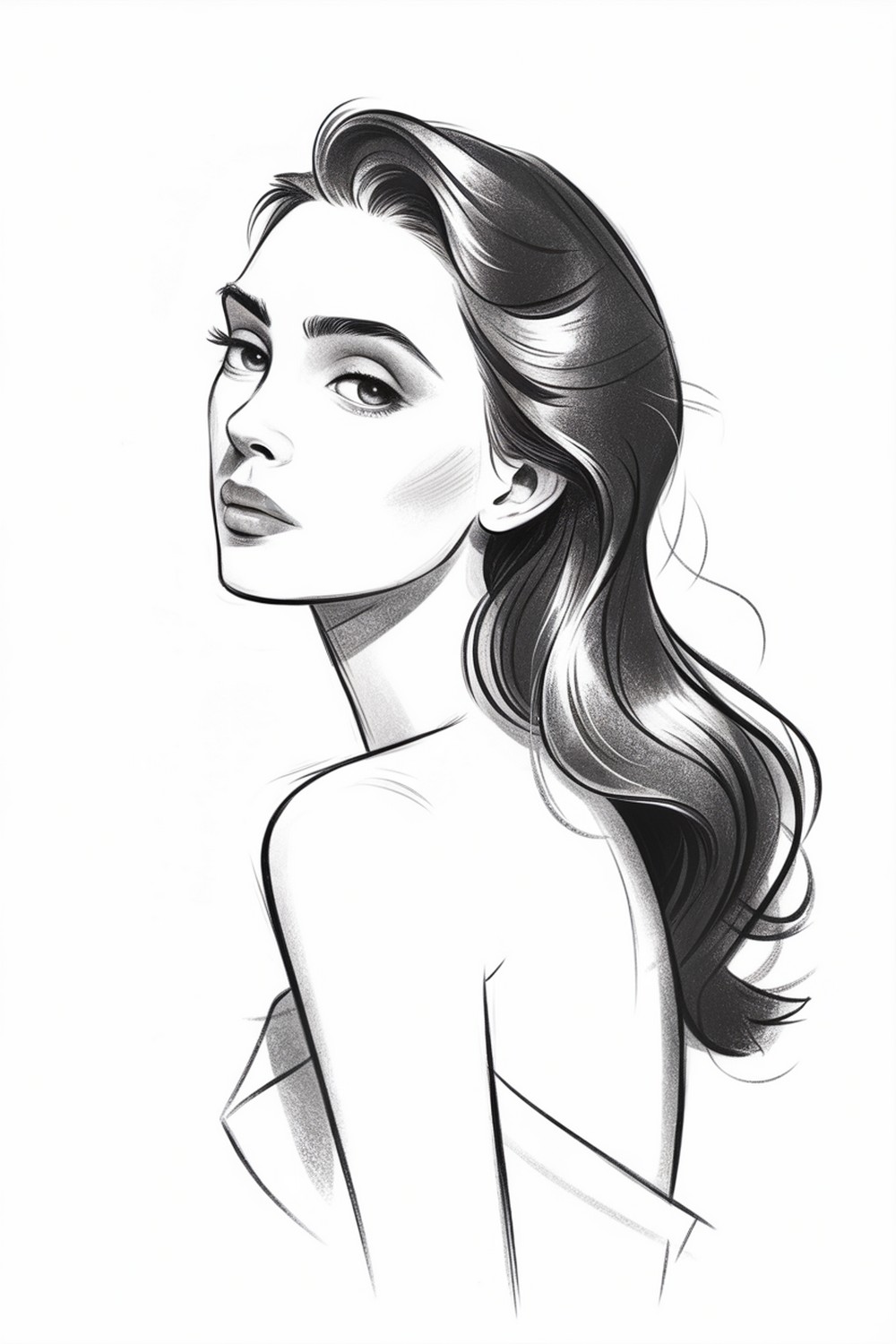
End with a surgical review. Clean duplicates, smooth wobbly arcs, and unify line weight. Tighten a few accents—the nostril core, upper lash line, concha shadow, and under-chin edge—then stop. Reassess negative space and silhouette for clarity from a distance. Sign small, placed where it doesn’t collide with the neck or vignette. The most elegant profiles feel effortless because every mark was considered. Leave air around soft edges so the drawing breathes and stays timeless.
Conclusion
Aesthetic side-profile sketches thrive on silhouette clarity, gentle plane design, and selective detail. Map proportions with quick landmarks, treat hair as graphic mass, and let edges breathe where light softens form. Use negative space and subtle backgrounds to polish the read, then finish with a few well-placed darks. When the profile feels poised from arm’s length, you’ve said enough—leave the rest implied.


